What Is Workflow Automation? (Plain-English Guide)
Quick answer: Workflow automation is the use of software to carry out repetitive business tasks — like moving a lead into your CRM, sending a follow-up email, or updating a spreadsheet — automatically, based on a trigger. It connects tools you already use so information moves between them without anyone doing it by hand, saving teams 10–20 hours a week on average.
The Simple Version: Trigger → Action
Say a new lead fills out your website form. Without automation, someone has to notice the form submission, copy the details into your CRM, assign it to a rep, and send a welcome email — probably a few hours later, if they're busy with something else.
With workflow automation, that entire sequence happens the moment the form is submitted. No one has to notice it. No one has to remember to do it. The software watches for the trigger (a form submission) and carries out the actions (add to CRM, assign rep, send email) instantly, every single time.
That's really all workflow automation is: trigger → action, built across the tools your business already runs, so a human doesn't have to be the glue between them.
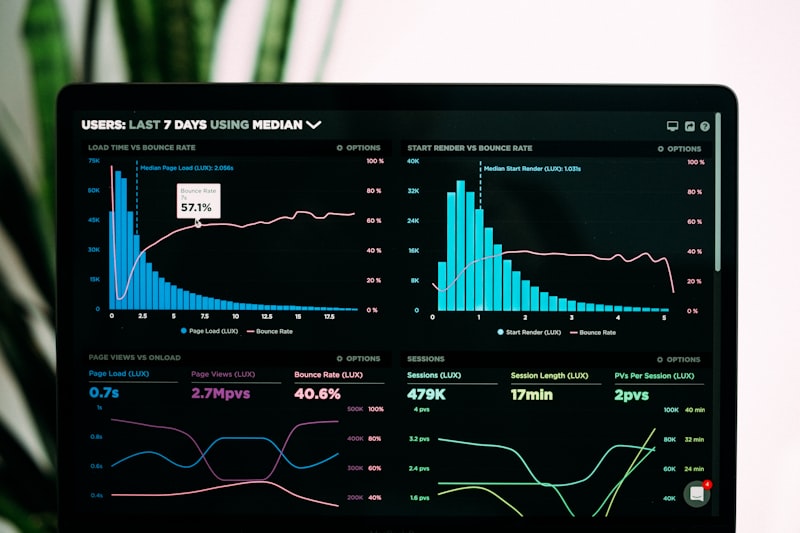
The Three Core Components of Any Automated Workflow
Every automated workflow, no matter how simple or complex, is built on three components:
- Trigger: The event that starts the workflow — a form submission, a new row in a spreadsheet, an email arriving, or a status change in your CRM.
- Actions: The steps that run automatically — creating a contact, sending an email, updating a record, assigning a task, etc.
- Conditions (optional): Logic that directs the flow — "if the lead is from the UK, assign to this rep; if from the US, assign to that rep."
When you connect these three pieces across your tools, you eliminate the need for a person to manually move data from one system to another.
A Brief History of Workflow Automation
Workflow automation isn't new, but it has evolved dramatically. In the 1990s, businesses relied on email rules and Excel macros to save a few minutes. In the early 2000s, enterprise software like SAP and Oracle introduced rigid workflow engines that required expensive consultants to configure.
The real shift happened in the 2010s with the rise of APIs. Suddenly, software could talk to other software natively. In 2012, Zapier launched, democratizing automation for non-technical users with its "if this, then that" model. In 2019, n8n entered the scene as an open-source alternative, giving businesses the ability to self-host and avoid per-task pricing.
Today, we're in the era of hyper-automation — combining API-based workflows with AI to handle unstructured data and complex decision-making. The shift from "automation for enterprises" to "automation for everyone" is now complete.
Workflow Automation vs. BPM vs. iPaaS
These terms are often confused. Here's how they relate:
- Workflow Automation: The tactical execution layer. It runs specific tasks (e.g., "send this email when a form is submitted").
- BPM (Business Process Management): The strategic layer. BPM is about mapping, analyzing, and optimizing the entire process from end to end. Workflow automation is the tool used to execute the BPM design.
- iPaaS (Integration Platform as a Service): The infrastructure layer. iPaaS (like Zapier, n8n, or MuleSoft) connects different software applications. Workflow automation is a capability built on top of an iPaaS.
Real-world analogy: Think of BPM as the architectural blueprint of a house. iPaaS is the plumbing and electricity that connects everything. Workflow automation is the smart home system that turns on the lights when you walk in. They work together, but they're not the same thing.
Workflow Automation vs. RPA vs. AI: What's the Difference?
These three terms are often used interchangeably, but they're not the same. Here's a clear breakdown:
- Workflow Automation: Connects modern tools via APIs. If you're using Zapier to connect your CRM to your email tool, you're doing workflow automation. It's API‑first and relatively fast to set up.
- RPA (Robotic Process Automation): Simulates a human clicking around an old desktop interface. It's used for legacy systems that don't have APIs. It's slower, more fragile, and prone to breaking when software updates.
- AI‑Powered Automation: Adds judgment to the flow. Instead of fixed rules ("if X, do Y"), the system can classify, extract, or decide based on data — like automatically categorising support tickets or extracting invoice data.
Key takeaway: Most modern businesses should start with workflow automation (API‑based). Only consider RPA if you have legacy systems that can't be replaced. Add AI once you need decision‑making.
The Top Workflow Automation Tools in 2026
Based on global search volume and real‑world usage, three platforms dominate the workflow automation space for SMBs. Here's how they compare:
n8n — Open‑Source Flexibility
n8n is an open‑source workflow automation tool that's gained massive traction. It's self‑hostable, which means you own your data and don't pay per execution. With over 1,900 monthly searches for "n8n workflow automation," it's the go‑to for businesses that want complete control.
Best for: Teams with technical resources who want to self‑host, avoid per‑task pricing, and need deep customisation.
Zapier — The Quick Connector
Zapier is the most recognised name, with 720 monthly searches for "zapier workflow automation." It offers thousands of pre‑built integrations and a simple "if this, then that" interface. It's the fastest way to connect two apps without any code.
Best for: Simple, two‑app connections where speed of setup is more important than cost or complexity.
Make.com (formerly Integromat) — Visual & Complex Logic
Make.com sits between Zapier and n8n. It offers a visual drag‑and‑drop interface that can handle complex, multi‑step logic with branching and routing. It's more powerful than Zapier for advanced scenarios but doesn't require self‑hosting.
Best for: Medium‑complexity workflows that need conditional logic and multiple branches, without the overhead of self‑hosting.
Which one should you choose? If you're connecting two simple apps → Zapier. If you need complex logic → Make.com. If you want total control and zero per‑task fees → n8n. Most of our clients start with n8n for long‑term cost savings.
Building Your First Automated Workflow: A Step-by-Step Walkthrough
Let's walk through a real example: Capturing leads from Typeform, creating them in HubSpot, and notifying a Slack channel.
- Step 1 (Trigger): Set up a webhook trigger that activates whenever a Typeform entry is submitted.
- Step 2 (Mapping): Map the form fields (Name, Email, Company, Message) from Typeform to the corresponding fields in HubSpot.
- Step 3 (Action 1): Use the HubSpot API to create a new Contact and a new Deal (if the lead is qualified).
- Step 4 (Condition): Add a logic node: If the "Message" contains "urgent," set the Deal priority to "High."
- Step 5 (Action 2): Send a formatted message to a Slack channel with the lead details and a link to the new Deal.
- Step 6 (Error Handling): Add a catch-all node that sends an email to the admin if the workflow fails at any point.
This entire sequence runs in under 3 seconds from the moment a prospect hits "Submit." No one has to log in, copy data, or remember to follow up.
10 Real‑World Examples of Workflow Automation
Here are ten common workflows that businesses automate every day — each one saves 5–20 hours per week:
- Lead routing: A new form submission is automatically assigned to the right sales rep based on territory or deal size.
- CRM ↔ Invoicing sync: When a deal closes in your CRM, the integration creates an invoice in QuickBooks or Stripe automatically.
- Follow‑up sequences: After a webinar registration, the attendee gets a reminder, a thank‑you email, and a post‑webinar survey — all automated.
- Support ticket triage: Incoming emails are categorised by urgency and assigned to the right support tier without human intervention.
- HR onboarding: A new hire triggers account creation, IT setup, payroll updates, and a welcome email — all in sequence.
- Inventory alerts: When stock falls below a threshold, a purchase order is automatically created and sent to the supplier.
- Invoice approval: An incoming invoice is routed to the right manager for approval, then to finance for payment.
- Document generation: A contract is automatically generated from a template and sent for e‑signature when a deal is won.
- Data enrichment: New leads are automatically enriched with company data (industry, revenue, employees) from an external API.
- Reporting: Weekly sales reports are compiled from CRM data and emailed to the leadership team automatically every Monday morning.
These aren't theoretical — we've built every single one of these for clients across the US, Canada, UK, and Australia.
How to Identify the Right Process to Automate
Not every process is worth automating. Here's a step‑by‑step framework we use with every client:
Step 1: Map the current process
Write down every step of the manual workflow. Include who does it, what tools they use, and how long it takes. You'll often find steps that can be removed entirely.
Step 2: Look for repetition and volume
If a task is done more than 10 times a week and follows the same pattern, it's a strong candidate. The higher the frequency, the higher the ROI.
Step 3: Check for rule‑based decisions
If the process involves clear "if‑then" logic, it's automatable. If it requires subjective judgment or negotiation, it might be better suited for an AI agent.
Step 4: Assess tool connectivity
Can the tools involved talk to each other via API? If yes, automation is straightforward. If not, you may need a custom integration first.
Step 5: Start small and scale
Automate one process first. Test it. Measure the time saved. Then move on to the next. This builds momentum and confidence.
Common Pitfalls When Automating Workflows (And How to Avoid Them)
We've seen hundreds of automation projects, and these are the most common mistakes businesses make:
- Automating a broken process: If your manual process is messy, automating it will only make it messy faster. Fix the process first, then automate it.
- Skipping error handling: What happens if the API fails? If an email bounces? Good automation includes fallbacks and alerts.
- Automating too much at once: Start with a single workflow. Master it. Then expand. Trying to automate everything at once leads to confusion.
- Ignoring documentation: If your team doesn't know how the automation works, they can't maintain it. Always document the flow.
- Forgetting about maintenance: APIs change. Tools update. A successful automation is monitored and maintained — not set and forgotten.
How to Measure the Success of Your Workflow Automation
You can't improve what you don't measure. Here are the KPIs we track for every automation project:
- Time saved: How many hours per week is the automation saving your team? Track before and after.
- Error rate: Has the automation reduced human error? For example, are there fewer missed follow‑ups or duplicate entries?
- Speed: How much faster is the process? For example, a lead that used to take 2 hours to route now takes 5 seconds.
- Volume capacity: How many more leads/deals/transactions can your team handle with the same headcount?
- ROI: Calculate the cost of the automation (time + tool costs) versus the value of time saved. Most automations pay for themselves within 3 months.
Real example: One of our clients saved 15 hours a week across their sales team by automating lead routing and follow‑ups — a 60% reduction in manual admin time, directly translating to more closes per quarter.
Security and Governance in Automated Workflows
Automation introduces new vectors for risk if not handled carefully. Here's how to keep your data safe:
- Never hardcode API keys: Use environment variables or built-in secret managers in n8n or Make.com.
- Implement OAuth where possible: Instead of sharing credentials, use OAuth to grant limited permissions to specific apps.
- Limit data retention: Don't log sensitive information (PII, payment details) in your workflow logs.
- Audit trails: Ensure every automated action leaves a trace, so you can trace back if something goes wrong.
- Review permissions regularly: Clean up unused automations and revoke access from former team members.
Future Trends: Agentic Workflows and MCP
The next evolution of workflow automation is agentic AI. Instead of static "if-this-then-that" rules, AI agents will be able to reason about the best path forward. For example, an agent could receive an email, analyze its sentiment, check the CRM for previous interactions, and decide whether to reply, escalate, or schedule a meeting—all without human intervention.
This is enabled by standards like MCP (Model Context Protocol), which allows AI models to connect directly to your tools and data. If you're curious about what this looks like in practice, we cover it extensively on our AI Agents & MCP integration page. The automation landscape is shifting from "connecting tools" to "enabling intelligence," and we're building this future right now.
Frequently Asked Questions
What is workflow automation?
Workflow automation is the use of software to carry out repetitive business tasks — like lead routing, follow-up emails, or data entry — without a person doing them manually. It connects the tools a business already uses so information moves between them automatically.
What are the best AI workflow automation tools?
n8n, Zapier, and Make.com are the most widely used workflow automation platforms in 2026. n8n suits businesses that want more control and self-hosting, Zapier is fastest for simple two-app connections, and Make.com handles complex, multi-step logic well. The right choice depends on the tools already in use and the complexity of the process.
Is workflow automation the same as RPA?
They overlap but aren't identical. RPA (robotic process automation) typically simulates a person clicking through an old desktop interface, while workflow automation connects modern tools directly through APIs — faster to build and less prone to breaking when software updates.
What's the difference between workflow automation and a CRM?
A CRM stores your customer and deal data. Workflow automation is what makes that data move — triggering a follow-up email, updating a status, or syncing a closed deal to invoicing — without someone doing it by hand inside the CRM.
Can small businesses use workflow automation, or is it just for enterprises?
Small businesses are often better candidates than enterprises, since they have fewer layers of approval and feel the cost of manual work more directly. Most single-workflow builds are affordable and can go live within one to two weeks.
What is an automated workflow?
An automated workflow is a sequence of tasks that runs automatically when a specific trigger occurs — such as a form submission, an email arriving, or a deal closing. Once set up, it executes the defined steps without manual intervention.
What is n8n workflow automation?
n8n is an open-source workflow automation tool that allows businesses to connect apps and automate processes. It can be self-hosted, meaning you own your data and don't pay per execution, making it highly cost-effective for high-volume workflows.
How do I get started with workflow automation?
Start by mapping your current manual process — write down every step. Then identify which steps are repetitive and rule-based. Connect your tools using a platform like n8n, Zapier, or Make.com. Test with a small data set before going live.
Can workflow automation reduce costs?
Yes — by eliminating manual data entry, reducing errors, and speeding up repetitive processes, businesses often save 10–20 hours per week per team member. Over a year, that translates directly to lower operational costs and higher productivity.
How does AI fit into workflow automation?
AI adds judgment to automation. While a traditional workflow follows fixed rules (if X, do Y), an AI‑powered workflow can handle exceptions, classify emails, extract data from documents, and make decisions — turning an automated process into an intelligent one.
What are common mistakes when automating workflows?
The most common mistakes are automating a process that hasn't been mapped properly, skipping error handling, and trying to automate too much at once. Start with one high‑impact, low‑complexity workflow first.
How long does it take to set up workflow automation?
Most single-process automations — like lead routing or follow-up sequences — take one to two weeks from audit to live deployment. Larger builds involving multiple tools or custom logic typically take three to five weeks.
Do I need to replace my CRM to automate my workflows?
No. Workflow automation is built on top of the CRM already in use. The goal is to remove manual busywork from the existing system, not to force a migration to a new platform.
What happens if an automated workflow fails or breaks?
Every well‑built automation includes error handling and a fallback notification, so a failed step alerts a real person instead of silently dropping data. The blueprint stage documents exactly what happens if any step fails, before the automation goes live.
What is the difference between workflow automation and BPM?
BPM (Business Process Management) is the strategic practice of mapping, analyzing, and optimizing an entire business process. Workflow automation is the tactical execution layer—it actually runs the specific tasks within that mapped process automatically.
What is an iPaaS and how is it different?
iPaaS (Integration Platform as a Service) is the underlying infrastructure that connects different software systems. Workflow automation is built on top of iPaaS. When you use Zapier or n8n, you are using an iPaaS to build automated workflows.
How automation improves HR compliance workflows?
HR compliance workflows (like new hire documentation, policy acknowledgments, and training certifications) are perfectly suited for automation. Automated workflows ensure every step is completed in the correct order, on time, and with a perfect audit trail—reducing legal risk significantly.
What is AI workflow automation?
AI workflow automation combines traditional rule-based triggers with machine learning models. Instead of just moving data, the system can read unstructured data (like emails or PDFs), make predictions, and handle exceptions automatically, reducing the need for human oversight.
Curious what's actually worth automating in your business? We'll tell you honestly on a free 30-minute call.
Book Your Free Audit CallGet a Free Automation Roadmap
Answer 3 quick questions — we'll tell you what's realistic to automate first.
We respect your privacy. No spam, ever.